It might not be necessary to have a mouthful of unsightly wire and bracket braces in order to have straight teeth and a renewed smile. Invisible braces, which boost physical and emotional confidence, are an attractive and barely noticeable alternative to traditional wire/bracket braces.
While traditional orthodontics is a preferable option for treating complex bite issues and some cases of misalignment, invisible braces can be used to treat the following conditions:
the overjet or overbite
Widely spaced or crowded teeth
Uneven teeth
While created for adults and older teenagers, invisible braces are not advised when baby teeth are still present. Traditional metal braces with brackets and wires on the front teeth are required for children and younger teenagers with orthodontic issues. But the only person who can decide if you’re a candidate is your dentist or orthodontist. Due to the requirement for complete and uncompromising participation, the alternative treatment was largely created for adults. The “trays” must be worn 22 hours a day and should never be misplaced or forgotten.
Popular types of invisible braces:
Ceramic, or “clear,” braces
Inside braces
Clear aligners
Quick Appointment
[gravityform id="1" title="false"]
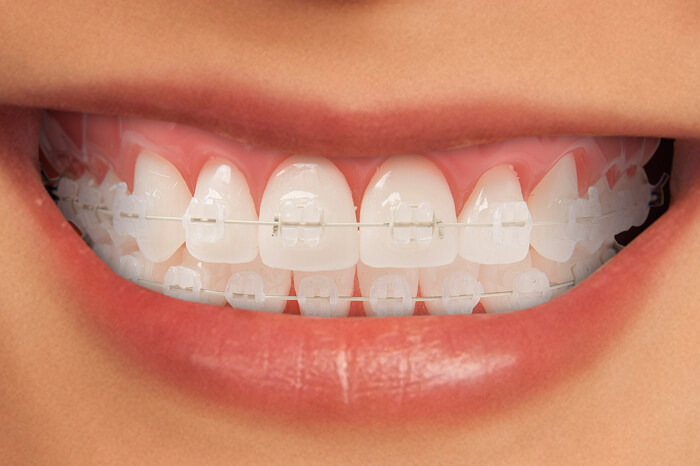
Ceramic Braces
are made of composite materials that are weaker and more brittle than their metal counterpart. Ceramic brackets are larger than metal brackets and require small rubber bands, or ligatures, (or built in spring clips on “self ligating” brackets) to hold them to the arch wire. Because the ligatures are white or clear, they can stain. However, staining is not a big problem because ligatures are changed every time you get an adjustment (generally monthly). The “self ligatiing” clips do not require retying with wires or elastics.
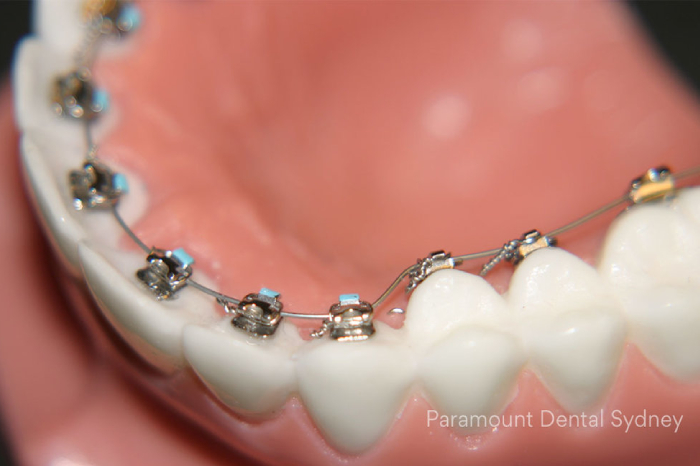
Inside braces
are attached to the back of the teeth so they are hidden from view. Current iBraces use scanned images of the insides of the teeth to create special, computer-designed custom brackets that are attached to the insides of the upper and sometimes lower teeth. This makes them appealing to people who are often in public and might feel self-conscious about wearing clear aligners or braces with metal or ceramic brackets/wires on the front of their teeth. Whereas clear, removable aligners can be misplaced or lost, thereby delaying treatment, iBraces are fixed and not removable. Elastics can be used with iBraces to help hasten treatment. Such elastics are available for use with clear aligners but are more difficult to use.
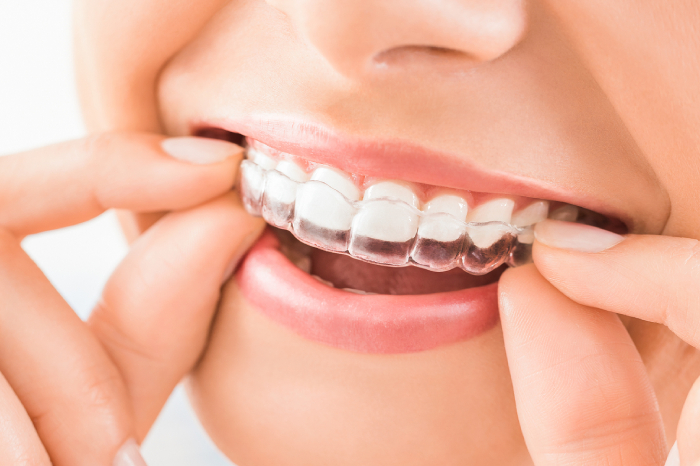
Clear Aligners
are a series of clear, removable aligners custom-fit to your teeth to provide virtually irritation-free treatment with minimal adjustment discomfort. Clear aligners are nearly invisible, minimally invasive and resistant to clouding from wear. With clear aligners, there are no brackets to come off or wires to break and poke. Clear aligners can be removed for eating, drinking and special events, making it easier to brush and floss.
Length of Treatment
The length of treatment depends on your situation and the type of invisible braces you are wearing. Typically, braces are worn from 18 to 24 months, though they are sometimes worn longer.
Metal braces work the best because they are made from the strongest materials. Ceramic braces, while strong and better looking, often take more time because they are not as strong as metal braces. Inside braces also can take more time to work effectively.
The treatment times with clear aligners vary. For example, Invisalign treatment, typically requiring 20 to 30 aligners for the upper and lower teeth, usually averages nine to 15 months to complete. ClearCorrect treatment times vary from 12 to 24 months and depends on the specific alignment problem; treatment for moderate cases requires 32 steps of treatment, delivered in eight phases, while minor cases require 12 steps of treatment, delivered in three phases.